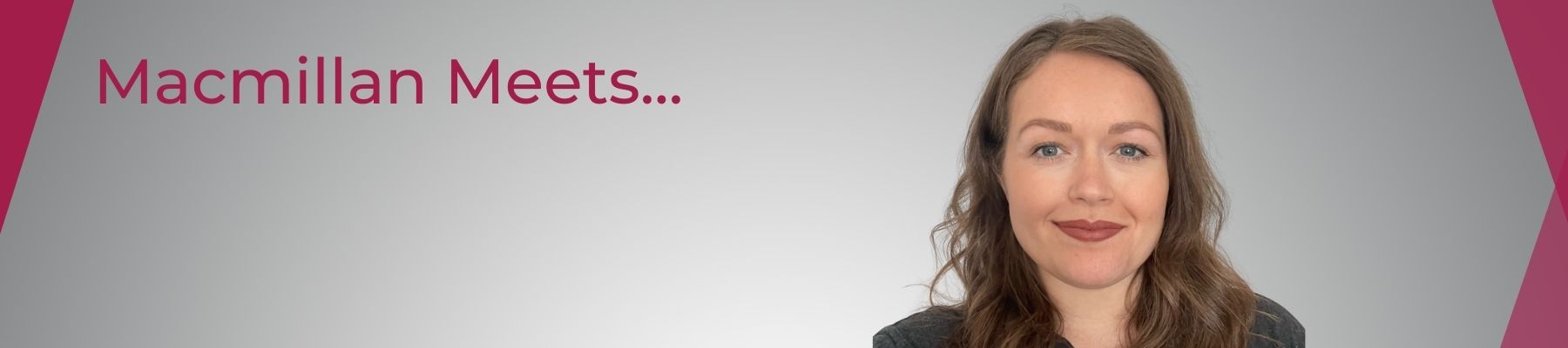
Macmillan Meets… Cara Myers, Talent Director
Tue, May 16, 2023
In the next instalment of our ‘Macmillan Meets…’ interview series, James Roberts talks to Cara Myers. Cara is an experienced international HR professional with a career that has seen her promoted to Global Talent Acquisition Director by the age of 28. She spoke with James about her career to date, shared her thoughts on how businesses can become more inclusive and diverse, the importance of 'offboarding', and shared details about the future of the HR function.
Tell me about your career to date.
I’ve spent 10 years working in People and Talent across the UK, America, Europe, Hong Kong, and Singapore. Including 3 years living in New York City (which was incredible)! My experience spans the people lifecycle, focusing on talent acquisition, learning and development, diversity, equity, inclusion and belonging, and more recently, HR Consultancy. I’ve always worked at high-growth businesses and have loved creating people processes that achieve growth.
My career started in internal talent acquisition when I joined a global recruitment business of 90 people. Initially supporting their New York office from afar, I increased the headcount from 10 to 40 people in a year. I then jumped on a one-way flight to New York at the age of 24, with less than 2 years of experience, to set up a talent function that could deliver headcount growth across America.
After increasing headcount from 40 to 250 people across 6 states in less than 3 years I was promoted to Global Head of Talent Acquisition. In this role, I led teams that took the business from 450 to 820 people in 2 years across 11 offices in America, Asia, and Europe. I was promoted to Global Talent Acquisition Director at the age of 28, making me the youngest Global Director in a company of 800 people. Something I never dreamed of when joining as a trainee 5 years earlier!
I began to miss working in a smaller, growing business. Particularly the excitement of growth and the ability to make things happen quickly. It was then that I discovered my last business, Trinnovo Group. Their focus on diversity & inclusion and CSR stood out to me as it aligned with my own values. Initially, I led their Talent Acquisition and Learning & Development teams globally. Delivering a strategy that enabled the group to grow from 80 to 210 people in 18 months as well as bringing entry-level training in-house. This supported their internal expansion and had a positive impact on retention and productivity. I also managed two high-volume, diversity recruitment projects for a client. Overseeing 2,100 hires from underrepresented backgrounds for a tech learning programme in just 8 weeks. This was incredibly rewarding and further ignited my passion for diversity & inclusion which led me to my last role.
In this role, I was responsible for diversity & inclusion internally at the group while also launching a consultancy that helped other businesses to overcome challenges with attracting, developing, and retaining talent. Here I realised that I missed working internally and that my passions lie with creating great strategies and fun people experiences that impact business performance. Be that diversity, headcount, retention, or engagement etc. Which led me to look for my next opportunity!
What inspired you to work within Talent Acquisition in particular?
The ability to directly impact the growth of a business excited me. When I joined, Phaidon was 90 people with ambitions to grow to 500 within 5 years. I loved the idea of being able to say that a massive part of the business achieving that growth was because of the work that I did. I knew that if I could hire and find the best people on the market, it would have a massive impact on the business that we wanted to build. This was really motivating for me. I also loved the idea of being the face of the business and meeting people from all walks of life. Quite often I think we forget what the hiring process is like for a candidate. I've always been passionate about creating processes and experiences that feel special and leave candidates excited about working for us.
In your experience of offboarding and with people you've worked with, would it usually be someone conducting the offboarding exercise or the exit interview? Would they normally be someone that knows the candidate leaving reasonably well, or really understands their job? Or is that important to you in terms of that relationship?
I’ve always worked in businesses where a member of the HR team conducts exit interviews. It’s incredibly important to ensure that this is done by a human, instead of having leavers fill out a survey. I don’t think it matters if the person understands the candidate’s job well. It’s more important that they listen and are kind and non-judgemental. It’s important to create an environment where people feel psychologically safe and as though they can be honest about their experiences, the good and the bad! This way the HR team can analyse trends and take this information to the board where needed to influence change that will have a positive impact.
One company I came across recently do all offboarding in person. Even flying employees out to an office for their offboarding if they’re remote, which I thought was interesting. They also give every leaver a present, wanting to create a positive leaving experience. I liked this idea. Creating a positive leaving experience can help you build an alumni group that may return in the future.
With businesses continually needing to work on becoming more diverse and inclusive, how do you think this can be done authentically, without it becoming ‘lip service’?
I really care about this. Nobody wants to, or should, get hired because of who they are or because them being hired enables a business to hit a quota. That negates everything that they've worked hard to achieve. To be authentic, four things come to mind, starting with talking about the ‘why’.
A lot of businesses talk about wanting to be more diverse and about targets that they've set - which is great. But there are fewer businesses sharing convincing information about why building diversity is important and the impact it’s going to have on their business. Is it important because you want your business to represent the world we live in? Is it because you want your business to be able to be more innovative and make the best decisions? Do you want to better relate to, and represent, your customers? Showing the why behind your diversity goals is powerful. It will set you apart and give candidates a reason to believe it’s genuine.
Once you can talk about your ‘why’, it's important to share the actions you’ve taken to remove barriers in your hiring process and make your business more appealing to different needs. Let’s imagine that you want to attract and hire more women. Do you use gender-neutral language in your recruitment marketing? Do you remove names from CVs? Are your interviewers trained on unconscious bias? Are women present in interviews? Do you offer paid menstrual leave, menopause support, mentoring for women, re-onboarding after maternity leave, or flexi-hours? If not, why not? If hiring more women is genuinely important to you it’s critical to show how you’ve shaped your offering to be more appealing, accommodating, and equitable to the needs of women. This shows women that they belong at your business.
Thirdly, it’s key to demonstrate what you're doing to create an inclusive culture and a safe place for people from different backgrounds. Have you got a diversity committee? Do you offer compulsory diversity training? How do you create psychological safety? What actions are you taking to reduce pay gaps? Are managers targeted on employee engagement? Do you accommodate Neurodiversity by setting an agenda for every meeting and creating quieter areas in your office? Do you provide training to your managers so that they’re able to better support team members with different needs than their own? Sharing information on the actions you’re taking shows the world that you’re committed to creating an environment where everybody, irrelevant of who they are or where they come from can come to work and be successful.
Lastly, share your progress towards your goals. Every 6 or 12 months is a good cadence. People appreciate honesty. It doesn’t matter if you aren’t where you want to be yet. Every business is on a journey. But it is important to share how far you’ve come and what the next actions are to get you closer to your long-term goals. This is also incredibly powerful. There are few businesses sharing information as detailed as this with potential employees. Doing so shows the world that you are committed and that it’s genuine.
One of the biggest debates when it comes to recruitment is the balance between having a diverse candidate, and the right candidate for the job. What role do you think HR and recruiters have to play in this?
There are two important things to consider. Firstly, it’s important to scrutinise how you’ve defined the ‘right’ candidate for the role. Is your talent pool lacking diversity because your job description creates barriers and removes certain candidates from the process? For example, does your advert ask for a certain number of years of experience versus what candidates should have achieved? If it does, you’re potentially removing women and younger people from your process. Women may have fewer years of experience because they've been on maternity leave, but they might have achieved more than someone who has more years of experience.
Does your description say that it’s essential for candidates to have a degree? Is this critical? If it isn’t, you’re missing out on a huge pool of candidates who didn’t go to university. Many may have been unable to go because of their socio-economic status, but they are brilliant candidates that bring fantastic experience that adds a different point of view. Assess what’s critical for a role, and what you can remove or change to widen your talent pool and increase diversity. Every person involved in hiring should take part in this process and be committed to removing barriers.
The second thing to think about is the long-term impact commercially on your business by not building diversity. It’s proven that diverse businesses report more innovation revenue, make better decisions, and are more likely to break into new markets. A lack of diversity can also hinder your hiring efforts. Glassdoor recently found that 1 in 3 candidates wouldn’t apply to work for a business that lacked diversity. Are you fixing a short-term pain, but creating long-term commercial impact by not taking action to build diversity now? If your talent pool is lacking in diversity, you could always hire a contractor while you take action to increase diversity in your talent pool.
Where do you see the HR function of the future and where does ED&I fit within it?
HR is quickly moving away from being a reactive function that enforces rules to being proactive and focusing on ‘people experience.’ People experience looks at the relationship between a company and its people, and the impact that this has on performance and growth. It focuses on optimising the employee experience, well-being, being the voice of the people, building incredible engagement, and an amazing culture that retains great people.
It is critical that EDI should report to the CEO. EDI experts should be working closely with HR, but not necessarily reporting to HR. This is because EDI needs to be more far-reaching than HR. It should touch every area of your business including marketing, compliance, product design, people, suppliers, operations etc. For this reason, it’s critical that they are part of Senior Management and sit on the Board so that they can align the EDI strategy to the business vision and goals.
What is the best piece of career advice you have received?
There are two. One I read online was from Richard Branson.
‘If somebody offers you an amazing opportunity, but you aren't sure you can do it, say yes—then learn how to do it later.’
That one stuck with me. I have consistently done that throughout my career, which has probably given me a few more grey hairs than I thought I'd have at this age!
The other was to “work as hard as you can in your 20s to get as high as you can.” This one stuck with me because I was very hungry and wanted to achieve things that other people hadn't at a young age. Success takes hard work, but that doesn't mean you should burn yourself out. Instead, focus on saying yes, learning at every opportunity, networking, putting yourself out of your comfort and becoming comfortable with failing to learn as much as you can to set yourself apart and give yourself the best chance of moving up the ladder as quickly as possible.
Get in touch
Should you wish to have a confidential chat with James Roberts to discuss the current HR market and where we can help with inclusive recruitment or your search for work/recruiting into your team, please contact him directly at jroberts@mdhr.co.uk
To ensure you don’t miss any updates from Macmillan Davies and to hear about our latest events click here to sign up to subscribe to our updates.