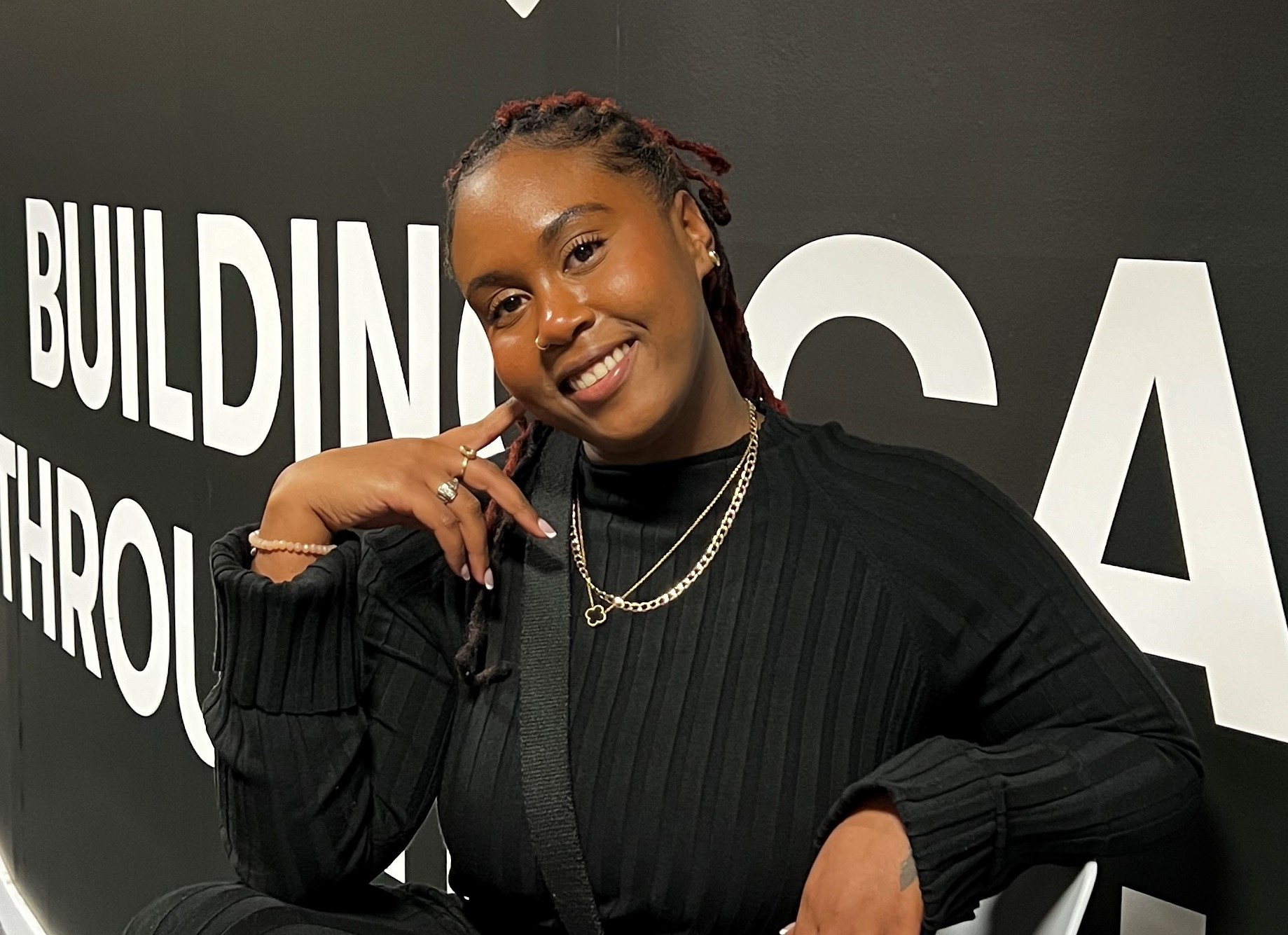
Standing firm in authenticity and purpose – Black History Month with Artiana Blaize
Tue, October 28, 2025
Introduction by Macmillan Davies
Each October, Black History Month invites us to reflect, celebrate and amplify the stories, voices and achievements of Black professionals whose contributions shape our workplaces and wider society. In the UK, it runs throughout the month of October.
At Macmillan Davies, we believe visibility and representation matter. This year, we spoke with Artiana Blaize, HR Systems and Data Partner at BPP Education Group and Wellbeing Lead for the CIPD Manchester Branch, about how her identity, experiences and mentors have influenced her career journey, and what meaningful representation looks like in today’s workplace.
Artiana Blaize, HR systems and data partner (BPP Education Group); wellbeing lead (CIPD Manchester Branch)
How has your identity shaped your career journey?
Being true to my identity has shaped my career journey in so many ways, particularly in building resilience.
Coming from the Virgin Islands and being a Black professional in the workplace, I’ve often had to navigate spaces where I didn’t always see myself represented. Rather than seeing that as a barrier, I’ve used it as motivation to create space for others and bring my full self to every role I’ve held.
My lived experiences have helped me lead with empathy and authenticity, qualities that are essential in HR. The biggest lesson I’ve learned is that difference is a strength; the things that make you unique often give you the perspective to create real impact. For instance, working in HR data and systems, I’ve used insights to open conversations around inclusion and belonging.
Have mentors, role models or networks influenced your path?
Absolutely. I’ve been lucky to be influenced by strong women throughout my life, from my mum and aunties, whose work ethic and resilience taught me the value of perseverance, to professional mentors who’ve guided my HR journey.
My first formal mentor was Olive Strachan MBE, whom I reached out to after the virtual CIPD Student Conference during COVID. One of the biggest lessons she taught me was, If you don’t ask, you don’t get. That message encouraged me to be more intentional about my growth and opportunities.
Through Olive, I was introduced to Samantha Lubanzu, another phenomenal leader who connected me to the CIPD Manchester Branch. I joined as a volunteer, completed the Career Accelerator programme, and built a strong network of HR professionals passionate about driving positive change.
More recently, I’ve taken part in the Black Women in HR mentorship programme, which has been transformational, from confidence building to career guidance. Mentorship isn’t just about advice; it’s about having a circle that challenges you, cheers for you and helps you grow personally and professionally.
What barriers have you faced and how did you overcome them?
Like many professionals, I’ve faced my fair share of challenges, from moments of imposter syndrome to navigating spaces where I didn’t always feel seen or heard.
What’s helped me overcome these moments is a strong support network of friends, family, mentors and colleagues who remind me of my capabilities when I start to doubt myself. I’ve learned to celebrate my wins, no matter how small, and to give myself grace as I grow, because growth is never comfortable, but it’s always necessary.
As a Christian woman, I also lean deeply on my faith. It grounds me during uncertainty and helps me lead with compassion and purpose.
What does meaningful representation look like at work?
Representation truly matters, not just in numbers, but in impact. To me, meaningful representation means seeing diversity reflected at every level of an organisation, with leaders who actively create space for others to thrive.
It’s not just about hiring diversely; it’s about retaining and developing diverse talent. Organisations should ask themselves:
- Are we setting our people up for success through our culture?
- Do colleagues feel psychologically safe and empowered to be themselves?
- Are we investing in development programmes that create real progression pathways?
Managers play a huge role in this. They’re at the heart of every employee’s experience. When leaders model inclusive behaviours and understand the value of belonging, it transforms the entire organisation.
In my role, I’ve used HR data to highlight representation gaps and partner with leaders to turn insights into action.
What legacy do you hope to leave for the next generation?
The legacy I hope to leave is one of authenticity and courage. I want the next generation to know that they can succeed by being true to themselves, that they don’t have to shrink or change to fit in.
It’s easy to compare your journey to others, but your path is your own. I want young professionals, especially those from underrepresented backgrounds, to feel confident carving out their own version of success.
If my career and visibility can show someone that they belong in these spaces too, then that’s something I’d be really proud of.
Macmillan Davies
At Macmillan Davies, we are proud to highlight the voices of HR professionals who are driving change, fostering inclusion and shaping the future of work.
#BlackHistoryMonth #HRCommunity #Inclusion #Belonging #MacmillanDavies